New Patients: Finding the right clinic shouldn't take forever! Click Here

Masseter Botox for bruxism explained by Dr Yiannis from the Anti Wrinkle Clinic - symptoms, first-line care, evidence, and when to ask for assessment

Does this sound familiar…?
You crawl into bed after a long day, finally ready for some rest. Hours later, you wake up groggy, your jaw feels sore, and there’s a dull ache creeping across your temples. It’s as if you’ve spent the night chewing through an entire pack of extra-strength, industrial-grade chewing gum.
If this sounds like you, then you may be dealing with something called bruxism.
Let’s take a look at what bruxism is, why it’s more common than ever, and where prescription treatments such as botulinum toxin may or may not fit within a broader care plan. [1][14]
Bruxism is the involuntary grinding or clenching of the teeth. It often happens at night while you're asleep, but for some, it occurs during the day too – especially in moments of stress or deep concentration. Many people don’t even realise they’re doing it until symptoms start creeping in, like morning headaches, jaw pain, or your dentist pointing out excessive tooth wear.
Bruxism is frequently associated with stress, anxiety and sleep factors, and its severity can fluctuate over time. [1] For many of my patients, high-pressure jobs and demanding personal or family schedules are some of the biggest triggers, manifesting in muscles and joints.
We often think of stress as something we carry in our neck and shoulders, but for many of my patients, it finds its way into the masseter muscle — leading to jaw clenching or teeth grinding while they sleep.
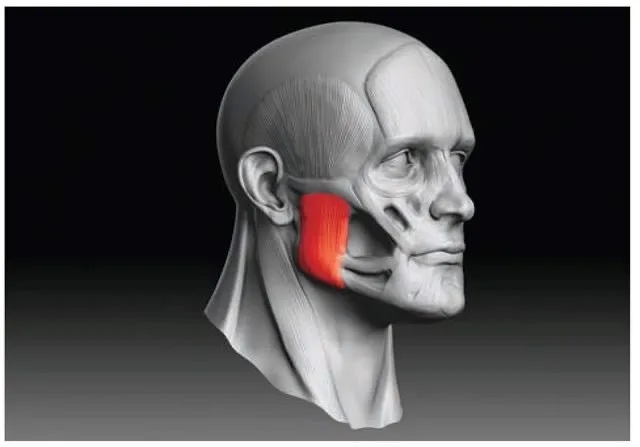
The masseter muscle is one of the strongest muscles in the human body based on weight. It’s located at the sides of your jaw and is primarily responsible for chewing. The masseter muscle essentially enables you to open and close your mouth and move your jaw from side to side. When you have bruxism, this muscle can become hyperactive. This contributes to increased clenching force and, over time, to muscle hypertrophy and facial squareness in some patients.
Studies have shown that Masseter Botox can help reduce muscle activity and bite force in people who clench or grind their teeth. By relaxing the overworked jaw muscles, it eases tension and protects the teeth from excessive pressure — without affecting normal facial movement or expression. [7][9][10]
Constant grinding wears down the enamel, the protective outer layer of your teeth. This leaves teeth vulnerable to sensitivity, decay, and even nerve exposure. Splints can help protect your teeth, but it’s still important to have them checked regularly. [5][13]
Excessive pressure from grinding can also cause teeth to chip, crack, or fracture entirely. This can be painful and often requires restorative dental work. [1]
Overusing jaw muscles can lead to chronic pain and reduced jaw mobility. You might find it difficult to open your mouth fully or chew comfortably. [14]
When a muscle is overworked, it grows. In bruxism patients, the masseter can become visibly enlarged, giving the lower face a squarer, more prominent appearance. [14]
Tense, overused muscles often become sore. Myalgia in the jaw and neck area is a common side effect of night-time teeth grinding. [14]
The temporomandibular joint (TMJ), which connects your jaw to your skull, can become inflamed and painful from continuous stress. [14]
These disorders can cause clicking, popping, locking of the jaw, and pain that radiates to the ears or head. Left untreated, TMD can severely impact your daily life.
In the world of aesthetic medicine, Botox (a purified form of botulinum toxin type A), is best known for smoothing facial wrinkles – but it also has powerful medical uses. When injected into the masseter muscle, Botox temporarily weakens its ability to contract forcefully, reducing the intensity of clenching and grinding. [5][8]
The treatment doesn’t paralyse the muscle completely, meaning you’ll still be able to chew and speak normally, but it does significantly reduces the pressure placed on the teeth and jaw. This not only relieves pain but can also prevent further damage and improve facial contour in those with masseter hypertrophy.
At the Anti Wrinkle Clinic, you’re in expert hands. Clinical Director, Dr Yiannis Valilas, isn’t just an aesthetic practitioner – he’s also a fully qualified general dentist registered with the General Dental Council (GDC) since 2005. His deep understanding of facial anatomy and jaw dynamics ensures that your treatment is safe, effective, and tailored to your needs.
Living with bruxism can be physically, mentally, and emotionally. If you’re tired of waking up in pain, worried about the damage to your teeth, or frustrated with the limitations of night guards and medications, it might be time to explore a different solution.
Bruxism treatment with Masseter Botox could be the thing that finally gives you something to smile comfortably about.
At the Anti Wrinkle Clinic, Dr Yiannis brings together clinical expertise, years of dental experience, and a patient-first approach to help you get back to living life without pain or discomfort. Book your consultation today and take the first step toward a healthier, more relaxed jaw and a better quality of life.
Medical disclaimer: This article is for educational purposes only and not a substitute for medical advice. Botulinum toxin is a prescription-only medicine, and masseter treatment can only be recommended after an individual consultation. Individual results may vary.
Regulatory note: Using botulinum toxin to manage masseter overactivity related to bruxism is an off-label application in the UK and should follow good-practice guidance on unlicensed/off-label prescribing, including informed consent. [11][18]
[1] NHS. Teeth grinding (bruxism). https://www.nhs.uk/symptoms/teeth-grinding/
[2] General Medical Council (GMC). Prescribing unlicensed (off-label) medicines: professional standards. https://www.gmc-uk.org/professional-standards/the-professional-standards/good-practice-in-prescribing-and-managing-medicines-and-devices/prescribing-unlicensed-medicines
[3] ASA/CAP. Enforcement notice: advertising Botox and other botulinum toxin injections https://www.asa.org.uk/resource/enforcement-notice-botox-social-media.html
[4] NICE Clinical Knowledge Summary (CKS). Temporomandibular disorders: management in primary care. https://cks.nice.org.uk/topics/temporomandibular-disorders-tmds/management/
[5] NCBI Bookshelf evidence summary: Botulinum toxin for temporomandibular disorders https://www.ncbi.nlm.nih.gov/books/NBK562946/
[6] MHRA. Advertise your medicines (POMs cannot be advertised to the general public). https://www.gov.uk/guidance/advertise-your-medicines
[7] Royal College of Surgeons (FDS) guideline: Management of painful temporomandibular disorder in adults (evidence-based, conservative first-line). https://www.rcseng.ac.uk/-/media/FDS/Comprehensive-guideline-Management-of-painful-Temporomandibular-disorder-in-adults.pdf
[8] Saini RS, et al. Effectiveness of botulinum toxin for temporomandibular disorders: systematic review and meta-analysis (2024 update). https://pmc.ncbi.nlm.nih.gov/articles/PMC10939295/
[9] Coelho MS, et al. Botulinum toxin for bruxism: overview of current evidence (2025). https://pmc.ncbi.nlm.nih.gov/articles/PMC12115368/
[10] Ferrillo M, et al. Role of botulinum toxin for masseter muscle hypertrophy and bruxism: narrative review (2025). https://pmc.ncbi.nlm.nih.gov/articles/PMC11860558/
Yes – every treatment at the Anti Wrinkle Clinic starts with a consultation. This is an important step to make sure the treatment you’re considering is both suitable and safe for you. During your consultation, I’ll take the time to understand your goals, review your medical history, and discuss what’s best for your skin.
Please note that payment doesn’t automatically guarantee a treatment. If anything comes up during your consultation that makes a procedure unsafe or unsuitable, I will explain why and recommend alternative options.
All treatments are personally performed by Dr Yiannis (that’s me!), a fully qualified medical aesthetic practitioner with over 20 years of experience. My academic and clinical background includes:
That goes for every consultation and injectable treatment at the Anti Wrinkle Clinic. Everything that happens in my clinic, I personally carry out – ensuring consistency, safety, and care from start to finish.
Yes – all injectable treatments at the Anti Wrinkle Clinic are prescription-only and fully regulated under UK medical guidelines. Treatments are prescribed and administered exclusively by Dr Yiannis, following an in-person consultation to confirm suitability.
Rest assured, we follow strict clinical and hygiene protocols, source products only from licensed UK pharmacies.
As with any injectable treatment, there are possible side effects – but most are mild and settle quickly. After treatment you may feel:
Less common side-effects but important to know:
Masseter Botox isn’t suitable for everyone. You shouldn’t have treatment if you’re pregnant, breastfeeding, have an active skin infection, or have known allergies to any of the ingredients.
If you have certain medical conditions, are taking blood-thinning medication, or have recently had facial procedures or vaccinations, treatment may need to be delayed. Rest assured, all of this will be discussed in your consultation.
Not entirely, no. Masseter Botox can definitely help lower muscle overactivity, pain, and tension for a period, but underlying triggers such as stress or sleep factors often remain. Unfortunately, if the underlying cause of your bruxism isn’t resolved, symptoms may return as the effect wears off.
Yes! You should have no problem chewing soft, everyday foods. A few of my patients have noticed temporary chewing fatigue with tougher foods – but this usually settles within a week (maybe two).
Most patients experience relief within couple of days, with peak effect happening anywhere around two to six weeks. Benefits commonly last three to six months, but it’s important to remember that results do vary from patient to patient.
Aftercare (first 24 hours)
Next 2–3 days
Learn more about our unique consultation process, your Face-to-face hour – a dedicated 60-minute, in-person appointment with Dr Yiannis.
Face-to-face hour